
April 2026 Payout Report: 37 New Receipts Added

This monthly report extends the live payout dataset with 37 additional verified receipts. The largest movement was in card tail risk: the 90th percentile improved versus March, while Pix and UPI remained stable with low-variance delivery windows. Core methodology is unchanged from processing times.
What Changed in April
- Card 90th percentile tightened to 28 hours in this snapshot window.
- UPI median remained near 71 minutes with no structural drift.
- Pix stayed sub-2-minute median across newly verified BR submissions.
Operational Notes
The reduction in card tail appears linked to fewer Friday-evening submissions in this batch. This is a sampling effect, not proof of permanent processor-side improvement. We keep this page separate from method pages to avoid intent overlap and keep report cadence indexable as a time series.
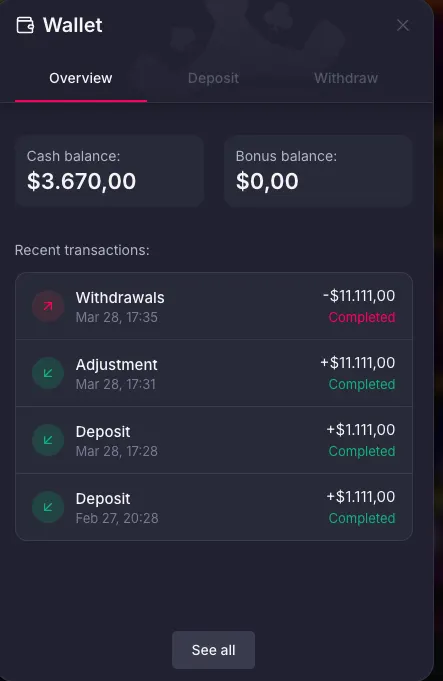
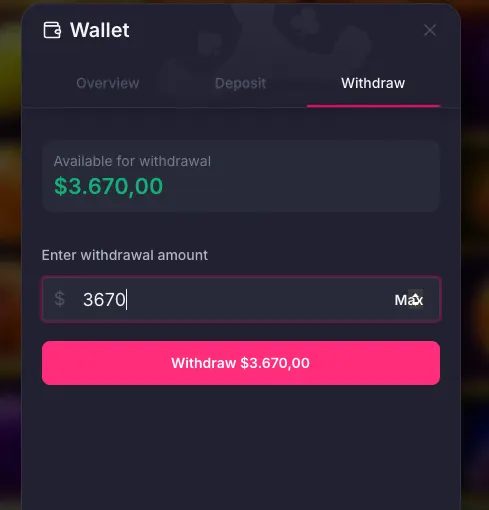
Evidence Screens
Related Reads
Method-level interpretation: methods comparison. Raw evidence queue: withdrawal proof. Troubleshooting if your result differs: not working.
How This Report Should Be Used
Use this post as a dated snapshot, not as a replacement for the evergreen method pages. If your own payout lands close to the timings described here, that's confirmation the method is behaving within expected tolerance. If your result is materially slower, compare your case against processing times, then run the blocker checklist on not working before assuming the payment rail itself failed.
The most useful way to read a short payout note is to separate platform handling from rail settlement. Pix and UPI updates usually describe pre-release handling drift inside Pin Up, while card and bank updates often reflect downstream processor and banking windows. That distinction matters because it changes which fix is realistic: a cashier delay is a support/KYC issue, while a bank-tail delay is usually a wait-it-out issue.
Editorial Next Step
When the final screenshots are added, this post should show three things clearly: the original request time, the credited destination time, and the method/status context that explains the wait. That turns this page from a useful note into a reusable proof asset that strengthens the whole withdrawal cluster.
How This Page Supports the Main Site
This page is intentionally narrower than the main guides around it. Its job is to document one dated signal, one tested scenario, or one specific operational change in a way that the evergreen overview pages should not. That makes it useful for readers who arrive with a freshness query and useful for the wider site architecture because it gives the core pages a credible, linkable support asset instead of forcing every new event into the homepage or FAQ.
If your own experience differs from what this page describes, that difference is worth investigating rather than ignoring. Either the pattern changed after this page was published, or your account/method/provider mix is behaving differently enough to deserve its own note. In both cases, the right next step is to compare this page with the evergreen guide it supports and use the final screenshot pack to document the gap clearly.
Source and Safety Note
This page is an editorial Pin-Up guide, not a promise of winnings, account approval, or payment speed. For broader player-safety context, see GambleAware safer gambling guidance. Keep sessions budgeted and use the Registration link only where online gambling is legal for you.